28th GET info event at the BMWE – Insights into our current advisory work in Albania, Kosovo, and North Macedonia
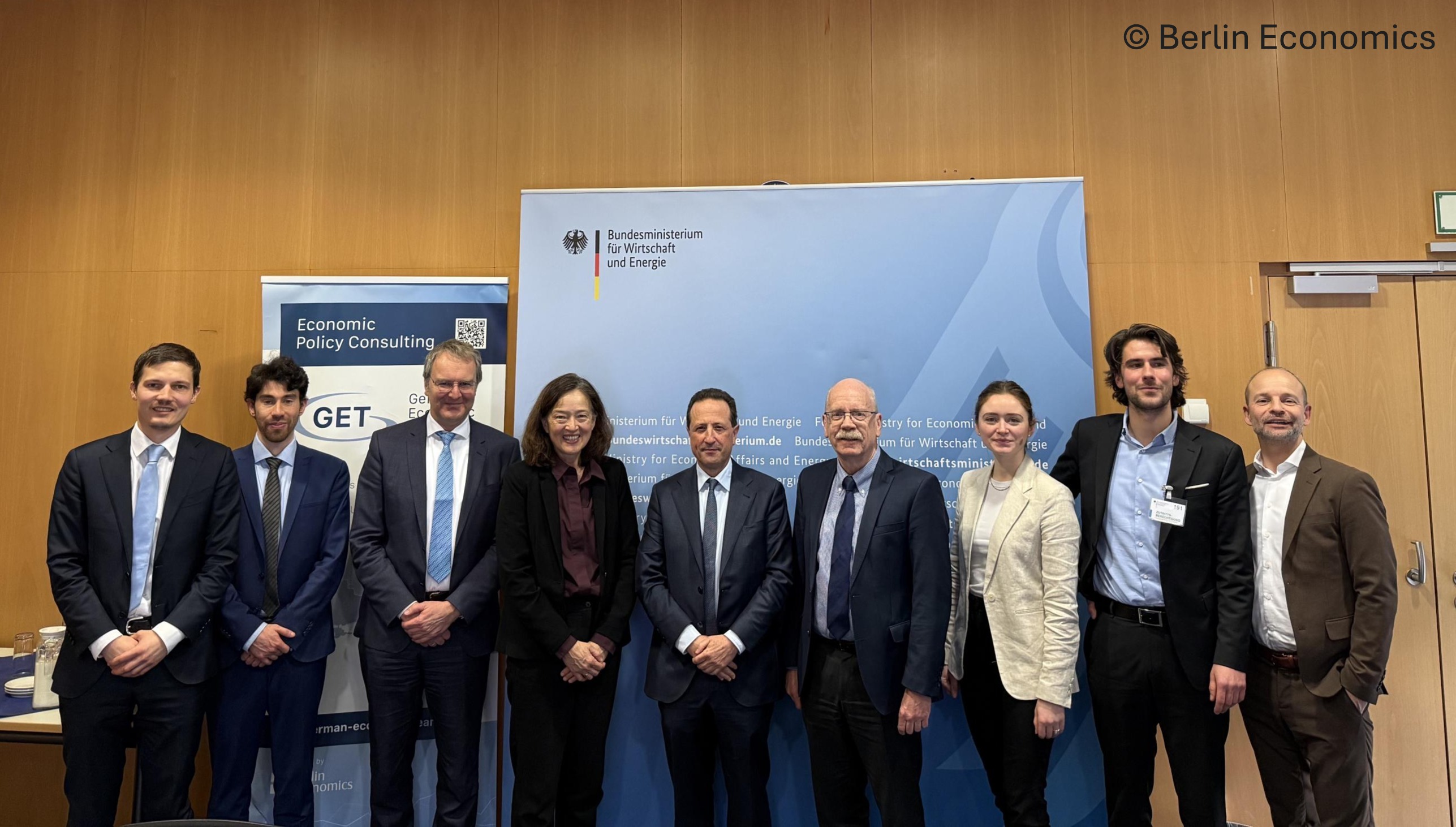
On January 22, the 28th edition of the German Economic Team’s (GET) information event took place at the Federal Ministry for Economic Affairs and Energy (BMWE). As part of this event series, we regularly provide insights into our current advisory work in the project countries. This time, the focus was on our ongoing activities in Albania, Kosovo, and North Macedonia.
The event began with a comprehensive overview of the economic situation in Albania by GET Team Leader Dr Ricardo Giucci. The ongoing tourism boom continues to have a positive impact on macroeconomic development. Rising service exports have been central to the solid GDP growth of recent years. At the same time, together with other factors such as high inflows of foreign direct investment (FDI), they have led to an appreciation of the Albanian lek and thus to a decline in inflation. Building on this, our investment promotion expert Björn Vogler presented recommendations to attract FDI to Albania based on a target group analysis.
Kosovo also recorded solid economic growth. However, inflation and the current account deficit increased at the same time. The latter rose in particular due to higher electricity imports resulting from power plant outages, as explained in detail by country coordinator Felix Schwickert. In order to improve long-term security of electricity supply, Kosovo’s previously fixed electricity price was partially liberalized in June 2025. Jente Mork from the Energy and Climate Team outlined the effects of the price liberalization and presented policy recommendations to effectively accompany the market opening.
In North Macedonia, economic growth is primarily driven by an expansionary fiscal policy and rising private consumption as a result of higher wages and pensions. However, the high level of public spending also has negative effects, as country coordinator Sebastian Staske explained. Recently, inflation has remained high, and the budget deficit is expected to stay at a relatively elevated level in 2026 as well. Dr Ricardo Giucci then presented the results of our study on the investment climate, including reform proposals in the areas of private sector development, public administration, legal framework, and the tax system.
Subsequently, Felix Schwickert compared the investment climate in the three countries. He concluded that in North Macedonia, the high budget deficit in particular weighs on the investment climate, while in Albania and Kosovo unresolved land ownership issues, a lack of industrial sites, and deficiencies in data protection represent key challenges. Sebastian Staske complemented the country comparison by presenting the results of our analyses on the economic benefits of a SEPA membership. Since October 2025, SEPA transfers have been available in North Macedonia and Albania, and Kosovo is also planning to join the SEPA system. The countries can expect cost savings of between EUR 50 and 70 million per year, with Albania showing the highest savings potential.
We would like to thank all participants for their contributions and the BMWE for the excellent organization. In particular, we thank Nina Wunderlich, Head of Sub-Directorate for Europe: EU Economic Policy, Internal Market, Bilateral Relations, EU Twinning (EB) at BMWE, for the opening remarks; Norbert Schultes, Head of Division EB6 at BMWE, for moderating the event; and Dr. Malte Hauschild, Head of Division EB5 at BMWE, for the closing remarks.
Comprehensive insights into the topics presented can be found in our latest economic outlooks: