
On August 30, the first part of the 21st information event on government consultancy at the Federal Ministry for Economic Affairs and Climate Action (BMWK) with the German Economic Team took place. The focus was on Ukraine, Moldova, Georgia and Armenia. The event was moderated by Mrs. Yildiz Götze, Head of Unit at the Federal Ministry. Dr Andreas Nicolin, Head of Subdivision for the promotion of foreign trade at BMWK, held the opening remarks.

DW spoke to experts from Germany and Belarus about which sectors and companies are most affected and how the decline in exports will affect the life of the Belarusian people.
The interview is in Russian.
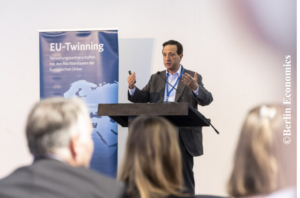
On 23 June, Berlin Economics participated in the Twinning Annual Meeting of the National Contact Point for Twinning and TAIEX at the Federal Ministry of Economics and Technology (BMWK).

“The danger of a nuclear incident, that is what our Ukrainian interlocutors fear the most at the moment”. Rouven Stubbe on the situation at Zaporizhnia Nuclear Power Plant.
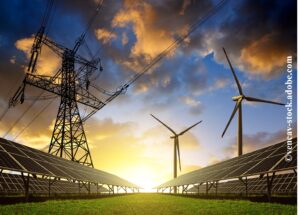
For the annual meeting of the OECD’s Green Action Task Force, we contributed a background study analysing the impact of the war in Ukraine on climate and energy policies in eight countries of the European Union’s Eastern Partnership and Central Asia: Armenia, Azerbaijan, Georgia, Kazakhstan, Kyrgyzstan, Moldova, Tajikistan, and Uzbekistan.
On May 31st, Berlin Economics, in the framework of Low Carbon Ukraine, together with Ecoaction and Bankwatch, hosted an online-roundtable on the climate-neutral reconstruction of Ukraine. The event had a total of around 60 participants, including experts from non-governmental organisations, think tanks and international companies.
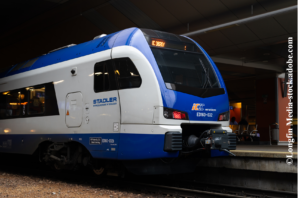
Quotation from Robert Kirchner in Neue Zürcher Zeitung (NZZ)
For the Swiss company Stadler Rail, the investment in Belarus is not paying off. The reasons for this are to be found not only in Western sanctions but also in misconceptions about the possible development of a single Eurasian market, says Robert Kirchner of Berlin Economics.

At the invitation of the German Ambassador in Tbilisi, H.E. Hubert Knirsch, the German Economic Team was given the opportunity to speak on the economic impact of the war in Ukraine on Georgia.
The war in Ukraine and the sanctions imposed on Russia have a wide range of economic consequences. Particularly affected are countries that have close economic ties with Ukraine and Russia. Russia itself is experiencing a significant drop in GDP.
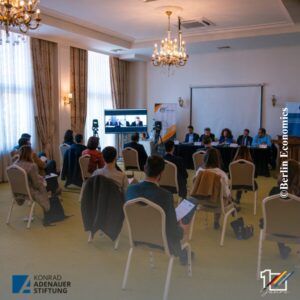
On April 6th, the German Economic Team participated in a conference on the economic development of the Western Balkan countries. The event was organised by the Konrad Adenauer Foundation and the Kosovar-German Business Association.
 Economic Consultancy